
Our favourite stretches for coccyx (tailbone) pain
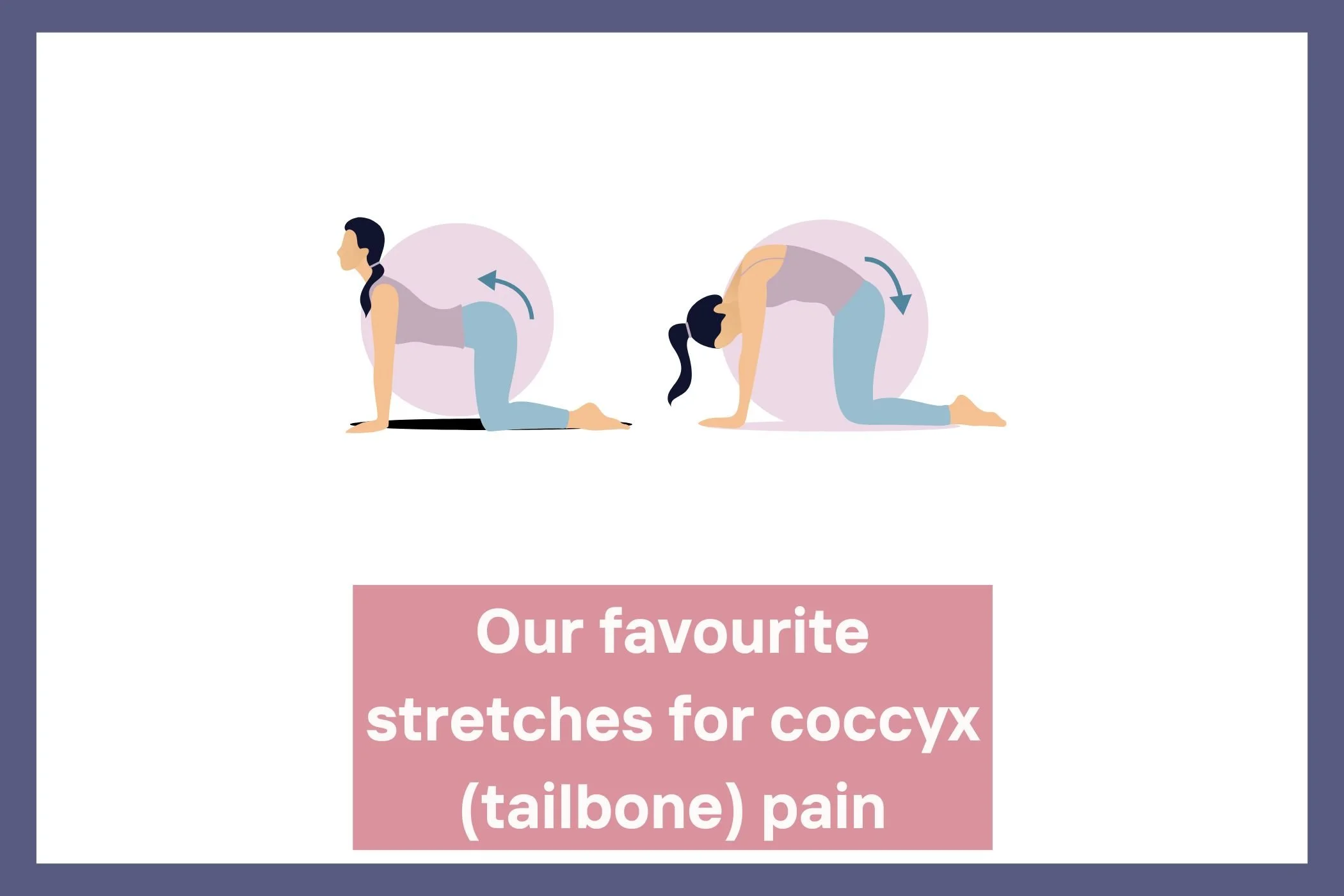
We often get asked what stretches you should do for coccyx pain relief, so we’ve listed some of our favourites below.
Why can stretches help with coccyx pain?
Coccyx (tailbone) pain is different for everyone, but one thing that most people have in common is that pain can make you tighten up. Almost everyone will benefit from adding some mobility exercises into their coccyx pain management plan.
These are some of our favourite exercises to help you relieve coccyx pain. Combining these exercises with a relaxed diaphragmatic breath will help your muscles to relax and have the added benefit of relaxing your central nervous system.
How to approach exercises for coccyx pain
Remember that everyone is different, so these stretches may not be right for you. The most important thing is to approach each exercise with gentleness and curiosity.
As you’re doing the movement, you may want to ask yourself how the movement is feeling. Does it feel like a good movement for you? If not, can you change it to make it feel better? Can you soften other parts of your body, such as your jaw, shoulders, or feet?
Happy stretching!
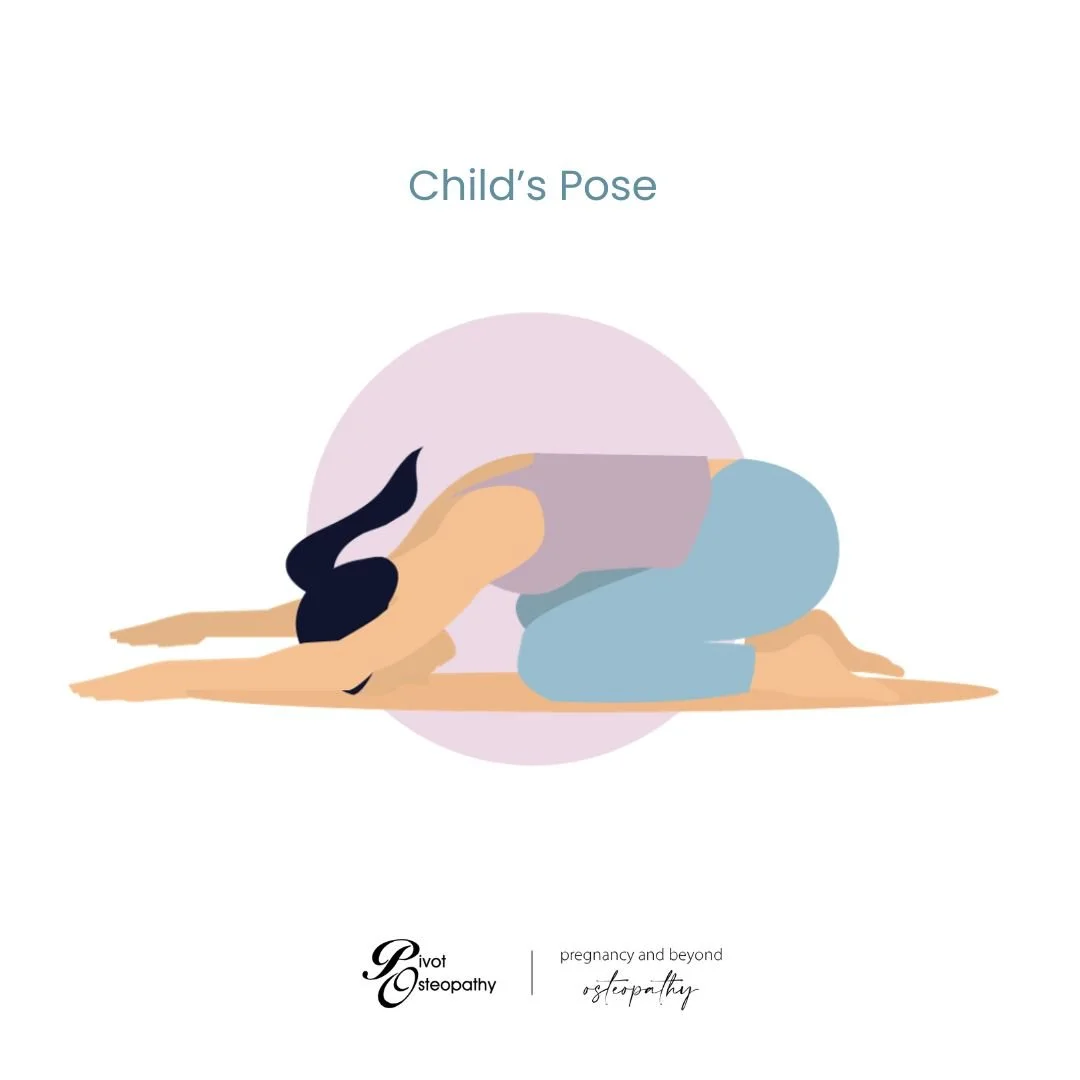
Child’s Pose
Begin in four-point kneel. Send your pelvis back to rest on your heels and walk your hands out in front of you.
Rest your head on the ground.
Allow a natural easeful breath as you bring your awareness to the movement of your pelvic floor with every breath.
Hold for 5-10 breaths.
Modifications:
If your pelvis does not sit comfortably on your heels, you can place a rolled up towel or pillow under your bottom.
If your head does not rest on the ground, rest it on a yoga block or some books.
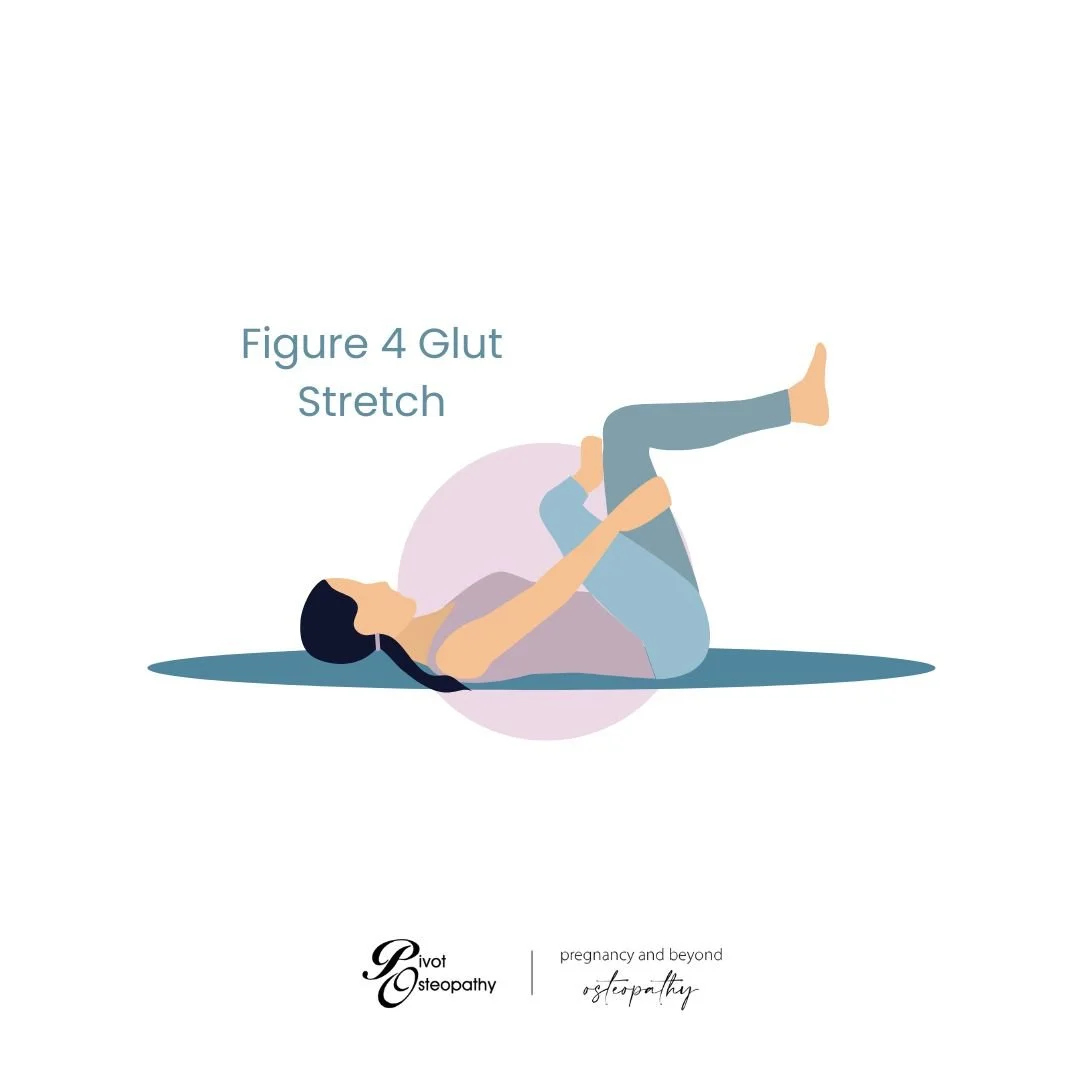
Figure 4 - glut stretch
Lie flat on the floor. If your head doesn't rest comfortably on the floor, use a folded blanket to support it.
Bend both your knees. Place your right ankle on your left thigh, just above your knee.
Interlace your hands behind your left thigh and as you exhale bring your thigh towards your chest.
Allow a natural easeful breath as you bring your awareness to the movement of your pelvic floor with every breath.
Hold this stretch for 5-10 breaths.
Modifications:
Place the foot of the supporting leg on a wall. Wiggle your body closer to the wall to increase the stretch
Sit on a chair and create a figure four. Lean forward to increase the stretch.
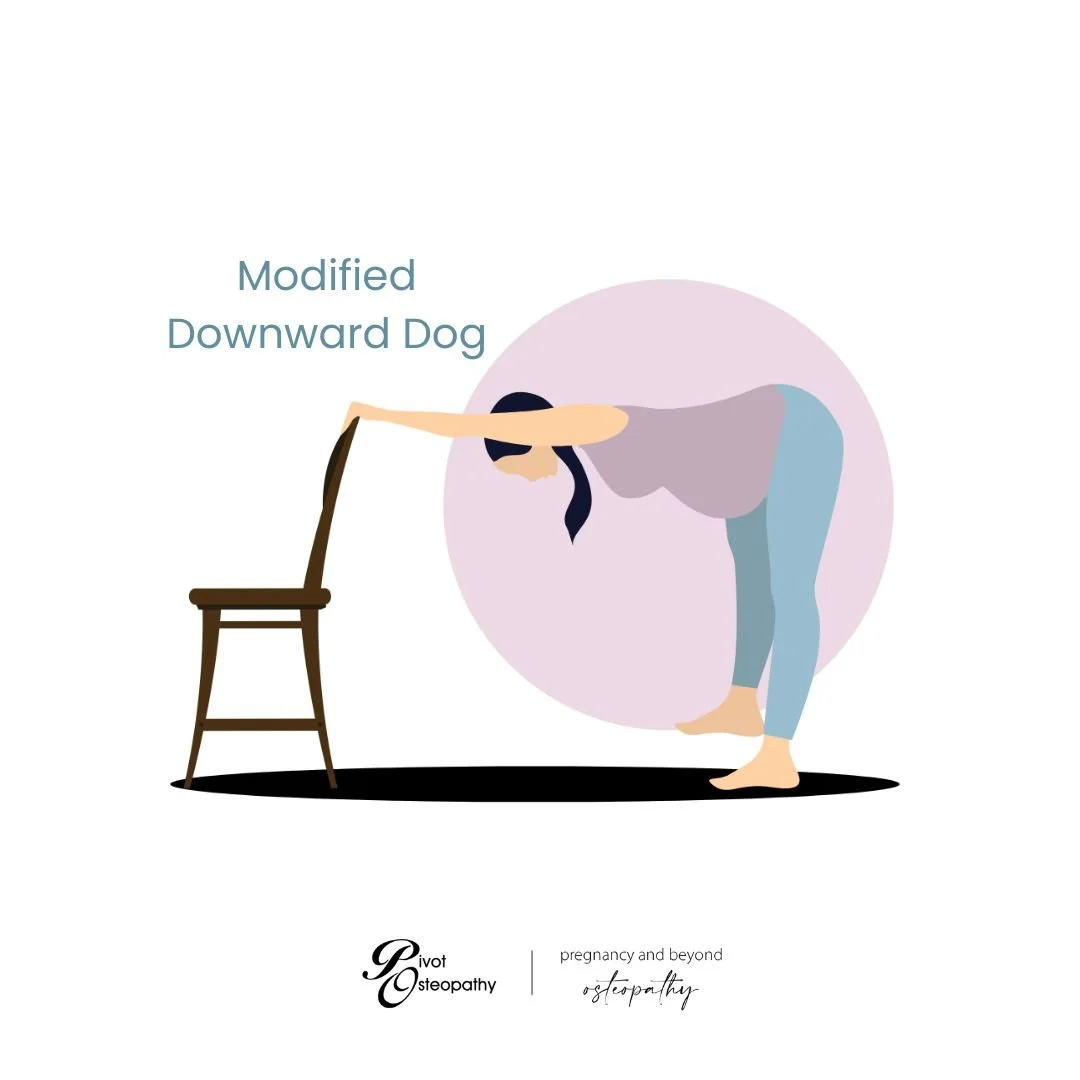
Modified down dog - to stretch your posterior chain
Stand with your feet hip-width apart, in front of a chair or bench.
Place your palms on top of the back of a stable chair or bench and gently press down as you slowly move your feet backward until your back is parallel to the ground.
You may like to have a little bend in your knees to enable your sit bones to move towards the ceiling.
As you inhale, feel your spine lengthen and as you exhale relax deeper into the stretch by moving your chest towards the ground.
You should be feeling a stretch through the back of your thighs and through your mid back or front of your shoulders.
Bring your awareness to your breath, trying to soften through your pelvic floor, shoulders, jaw and feet.
Repeat for 3-5 breaths.
Modifications:
You may like to turn your feet in and observe how this changes your stretch. If it feels good, repeat above in this position
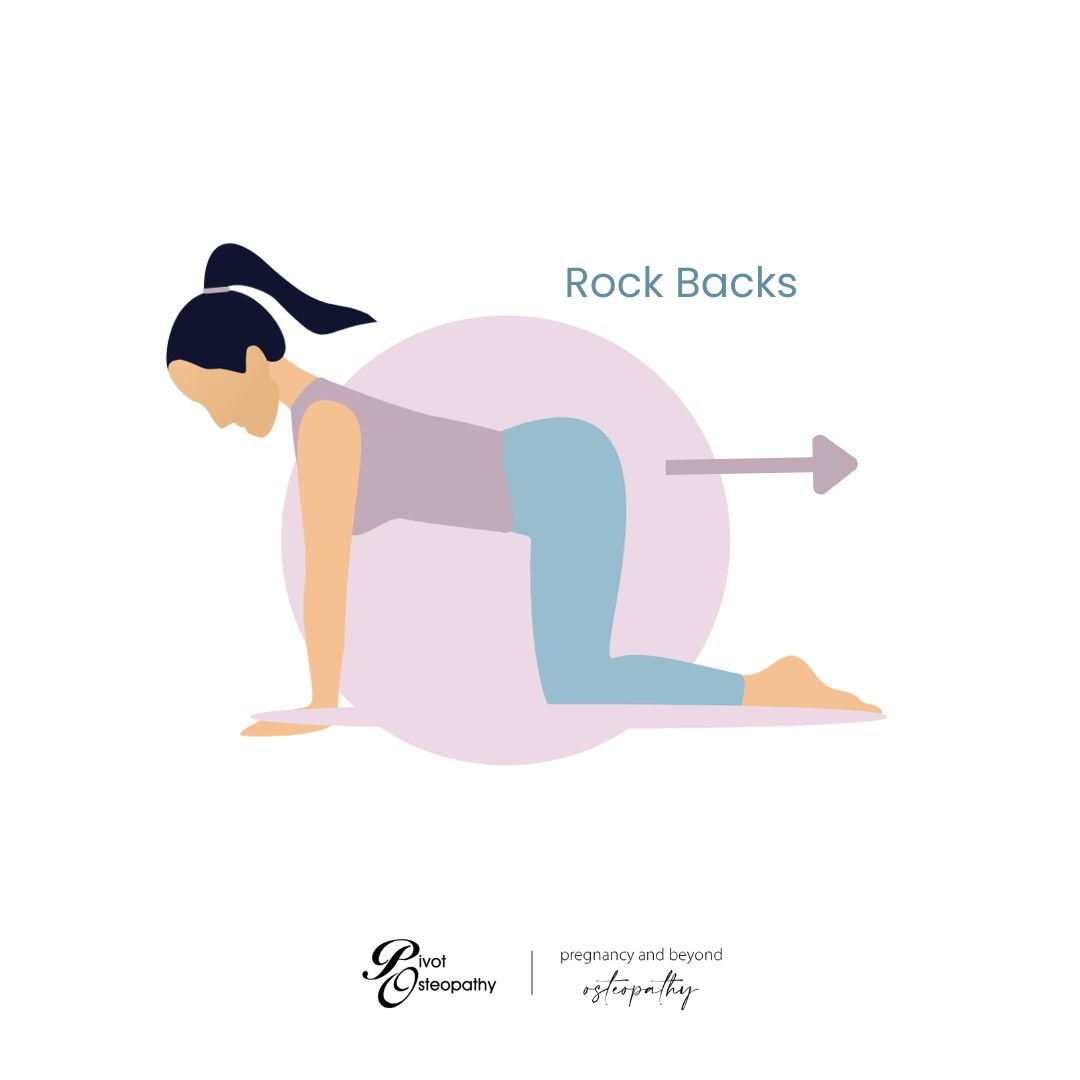
All fours rock back
Begin in four point kneel - Hands under shoulder, knees under hips.
As you inhale, un-tuck your pelvis and send your hips back towards your heels.
As you exhale, allow your pelvis to move into a neutral position and transition back to four point kneeling position.
Bring your awareness to your pelvic floor. Feel it soften as you inhale. Try to hold the softness as you exhale.
Repeat up to 10 times and rest in Child’s Pose.
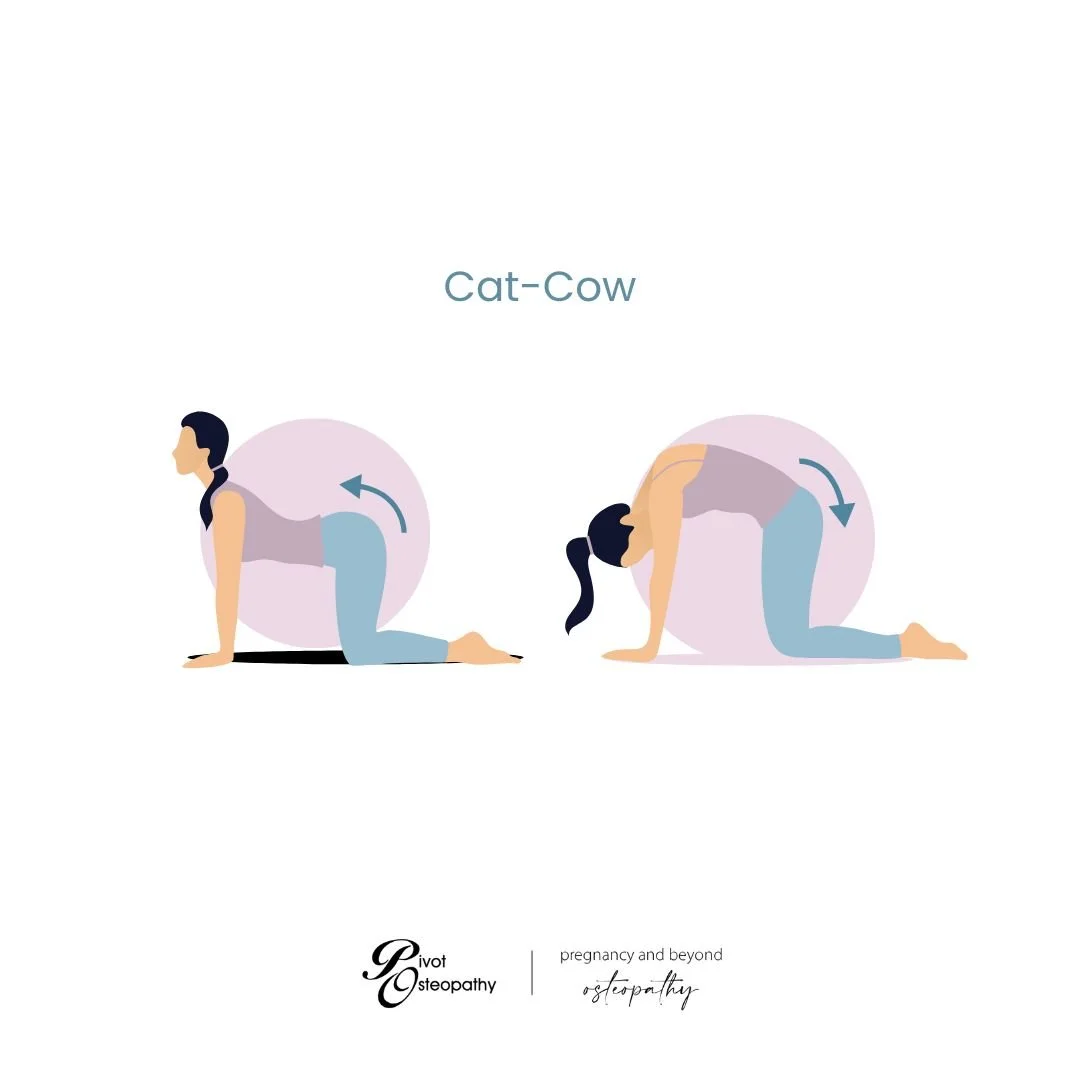
Cat-Cow
Begin in four point kneel - Hands under shoulders, knees under hips.
Cow: As you inhale, allow your belly to soften, tilt your pelvis forwards (tailbone to ceiling) creating a gentle arch in your back. Slowly lift your gaze.
Cat: As you exhale, allow your pelvis to tuck under. Push your hands into the ground to feel a stretch through your upper back, creating a curve in your spine. Bring your gaze down towards your belly button.
Flow between cat and cow, synchronising movement with your breath. Have the movement of your pelvis initiate each transition.
Modifications:
You may like to pause in cat pose, sending your breath to your mid back.
You may like to pause in cow pose, sending your breath to the front of your chest.
We love these exercises, but we also know that treating coccyx pain is rarely one-size-fits-all.
Coccyx pain can be influenced by muscle tension, joint mechanics, posture, nervous system sensitivity, and experiences such as pregnancy, birth, falls, or prolonged sitting. For some people, guided support can make a difference in understanding what is contributing to their symptoms.
If you would like more personalised advice, why not book in with one of our osteopaths. Coccyx pain is one of our passions
At Pivot Osteopathy and Pregnancy & Beyond Osteopathy, we take a whole-person approach to coccyx pain. This may include hands-on therapy, education, lifestyle considerations, and exercise — tailored to you.
Want to know more about how an osteopath approaches coccyx pain? Read more here: How do Osteopaths treat coccyx (tailbone) pain?
Disclaimer: This blog is for general informational purposes only and does not constitute the practice of medicine, osteopathy, nursing or other professional health care services, including the giving of medical advice, and no practitioner/patient relationship is formed. The use of information on this blog or materials linked from this blog is at the user's own risk. The content of this blog is not intended to be a substitute for professional medical advice, diagnosis, or treatment. Users should not disregard, or delay in obtaining, medical advice for any medical condition they may have, and should seek the assistance of their health care professionals for any such conditions.