
Does Your Baby Have Torticollis? Signs, Causes and How Osteopathy May Help

Does Your Baby Have Torticollis?
Signs, Causes and How Osteopathy May Help
Does your baby prefer turning their head one way rather than the other? Or maybe you're concerned about a flat spot on their head?
This is something we see often in the clinic. One of the most common causes is torticollis, also known as “wry neck”.
What is torticollis?
Torticollis is when a baby’s neck muscles are tight on one side, making their head tilt or rotate in one direction.
Most babies with torticollis have what’s called congenital muscular torticollis. It is caused by tightness or shortening of a neck muscle called the sternocleidomastoid (SCM). This muscle runs from behind the ear down to the collarbone, and when it is tight it can pull your baby’s head into a tilt toward that side. Often you'll see that the chin turns to look the other way (Kuo et al., 2014).
Some things you might notice if your baby has torticollis
Their head is tilted constantly to one side
They prefer looking to one side and find it difficult to look the other way
They prefer to feed on one side and may have feeding challenges on the other
They may have a flat spot on the back of their head (plagiocephaly) from favouring one side
Why do babies get torticollis?
Torticollis is often related to how a baby is positioned before or during birth.
Before birth, it is thought that limited space in the uterus may place uneven pressure on a baby’s neck as they grow, resulting in tension on one side.
Another reason torticollis may develop is a long or difficult labour, which can place tensions through a baby’s head and neck. This reason is more common if assistance such as forceps or vacuum methods were required for birth.
These influences can contribute to muscle tightness around the neck and base of the skull. When these areas are tight, it can affect how freely a baby can move their head and how comfortable they feel in different positions.
We know some of the mums we see can feel guilty when we tell them this, but please don’t. Your baby is so adaptable and remarkable. Sometimes they just need a bit of extra help to get them moving comfortably.
Why early support is helpful in treating torticollis
Babies grow and develop quickly. Neck or body tensions can affect how movement patterns develop, which may influence:
Head shape (and the development of flat spots)
How easily a baby feeds
Motor development (like rolling, crawling, and sitting)
Addressing torticollis early helps restore balance in the body and supports more symmetrical development.
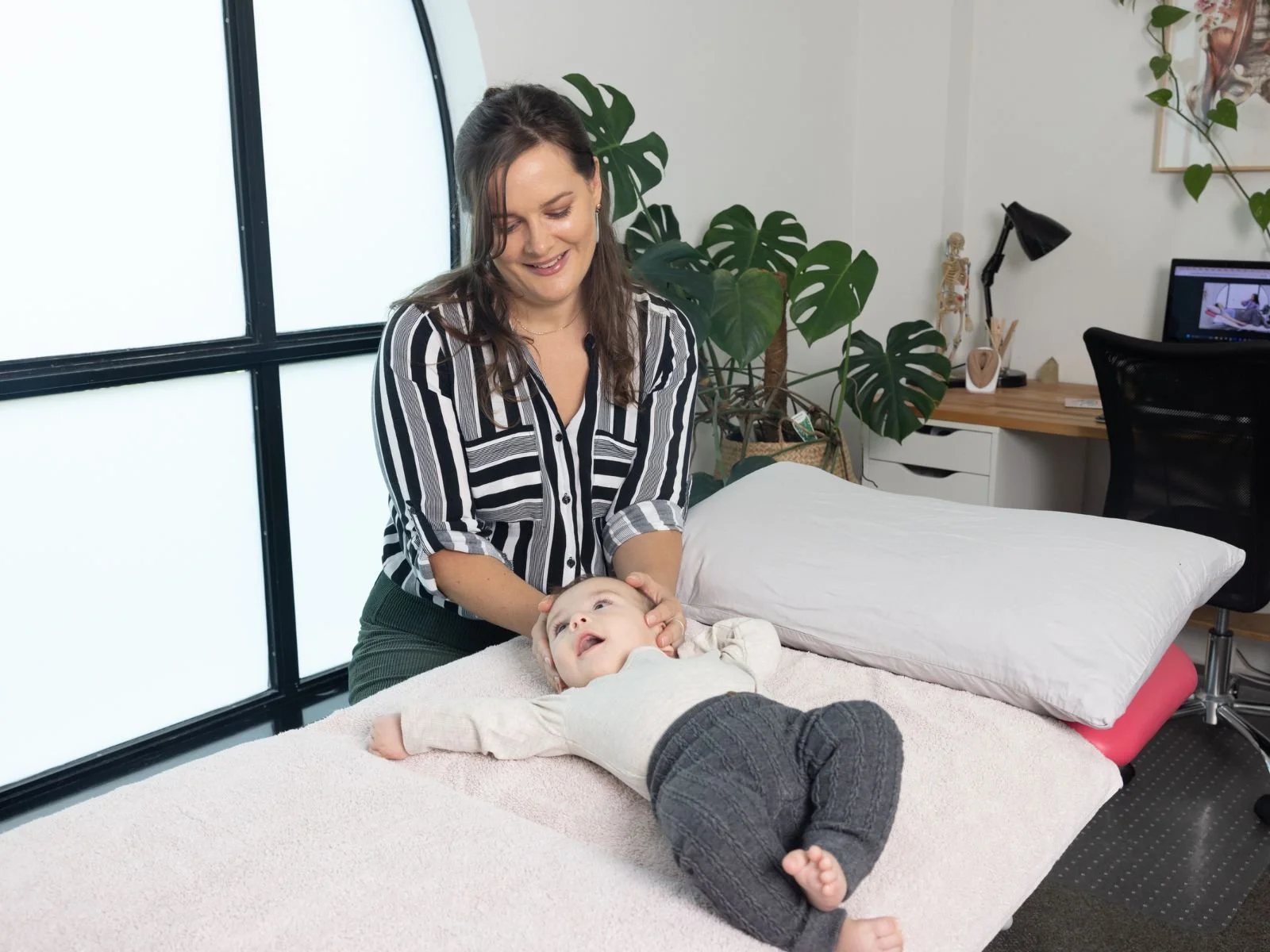
How osteopathy may help
Osteopathic treatment for infants uses very gentle and non-forceful techniques to address areas of tension and imbalance in the body, generally around the neck, shoulders, back and base of the cranium. As osteopaths, we aim to release tight muscles and improve range of motion in the head, neck and body, thereby supporting your baby to feel more comfortable and have better symmetrical movement (Berkowitz, 2017).
In addition to hands-on treatment, we spend a lot of time providing advice and guidance to the parents we see on positioning, specific holding techniques and simple exercises to support your baby’s progress at home.
If you feel like your baby isn’t turning their head well, they have stiffness in their neck, they’ve got a flat spot developing on their head, or you think they’re not very comfortable in their body, why not book in with one of our friendly paediatric trained osteopaths. We love supporting new babies and their parents.

Disclaimer: This blog is for general informational purposes only and does not constitute the practice of medicine, osteopathy, nursing or other professional health care services, including the giving of medical advice, and no practitioner/patient relationship is formed. The use of information on this blog or materials linked from this blog is at the user's own risk. The content of this blog is not intended to be a substitute for professional medical advice, diagnosis, or treatment. Users should not disregard, or delay in obtaining, medical advice for any medical condition they may have, and should seek the assistance of their health care professionals for any such conditions.