Could Therapeutic Ultrasound Help Your Caesarean Scar?
Why Does My Caesarean Scar Still Feel Tight, Numb, Or Uncomfortable?
If you've found yourself asking this question months or even years after your caesarean birth, you're certainly not alone.
Recovery from a caesarean birth can continue long after the incision has healed. While some scars are barely noticeable, others continue to feel tight, sensitive, numb, or restricted.
Recovery is so variable because a caesarean scar involves more than just the skin. The surgery affects multiple layers of tissue, including fascia, muscles, nerves, and connective tissue. For some people, changes within these tissues may influence how the lower abdomen feels and moves. They may feel pulling, discomfort, sensitivity, or changes in the way they move and use their body.
It's important to remember that symptoms are rarely caused by one factor alone. Scar tissue may be one contributing factor, but other factors can include in changes in strength, how you move, how the area feels and how you feel about your scar and recovery. We want to help you understand why your scar is affecting you.
At Pivot Osteopathy, supporting people after caesarean birth is an area we care deeply about. One of the tools we use for scar management is therapeutic ultrasound.
What Is Therapeutic Ultrasound?
Therapeutic ultrasound (aka TUS) is a treatment that uses sound waves that are completely inaudible to the human ear.
Unlike diagnostic ultrasound, which is used to create images of structures inside the body, therapeutic ultrasound is used to deliver sound energy into tissues beneath the skin.
It is a gentle, non-invasive treatment that has been used for many years to help treat soft tissue conditions, such as muscle or scar issues. In the context of caesarean scar care, therapeutic ultrasound may be used to target deeper layers of tissue where scar-related restrictions can sometimes develop.
How Does Therapeutic Ultrasound Work?
Therapeutic ultrasound can be delivered in two different ways, depending on your stage of healing and your individual presentation.
Continuous Ultrasound
Continuous ultrasound produces a gentle warming effect within the tissues.
This warmth may help increase local blood flow and may influence the flexibility of collagen fibres, which are an important component of scar tissue. The aim is to encourage the tissues to become more mobile and adaptable.
Pulsed Ultrasound
Pulsed ultrasound delivers sound waves without creating significant heat.
Instead of heat, it produces subtle mechanical effects within the tissues that may support normal cellular activity and tissue repair processes. For this reason, pulsed ultrasound is often used during earlier stages of healing.
Research suggests that these effects may help support tissue healing and scar remodelling processes (Leung et al., 2004; da Costa Gonçalves et al., 2007). However, individual experiences and responses to treatment can vary.
What Does A Therapeutic Ultrasound Session Involve?
Your appointment will begin with a thorough assessment.
We will take the time to understand your symptoms, examine your scar, and consider how the surrounding tissues may be influencing your comfort, movement, and overall recovery.
Together, we'll discuss the treatment options available to you, including whether therapeutic ultrasound may be appropriate for your situation.
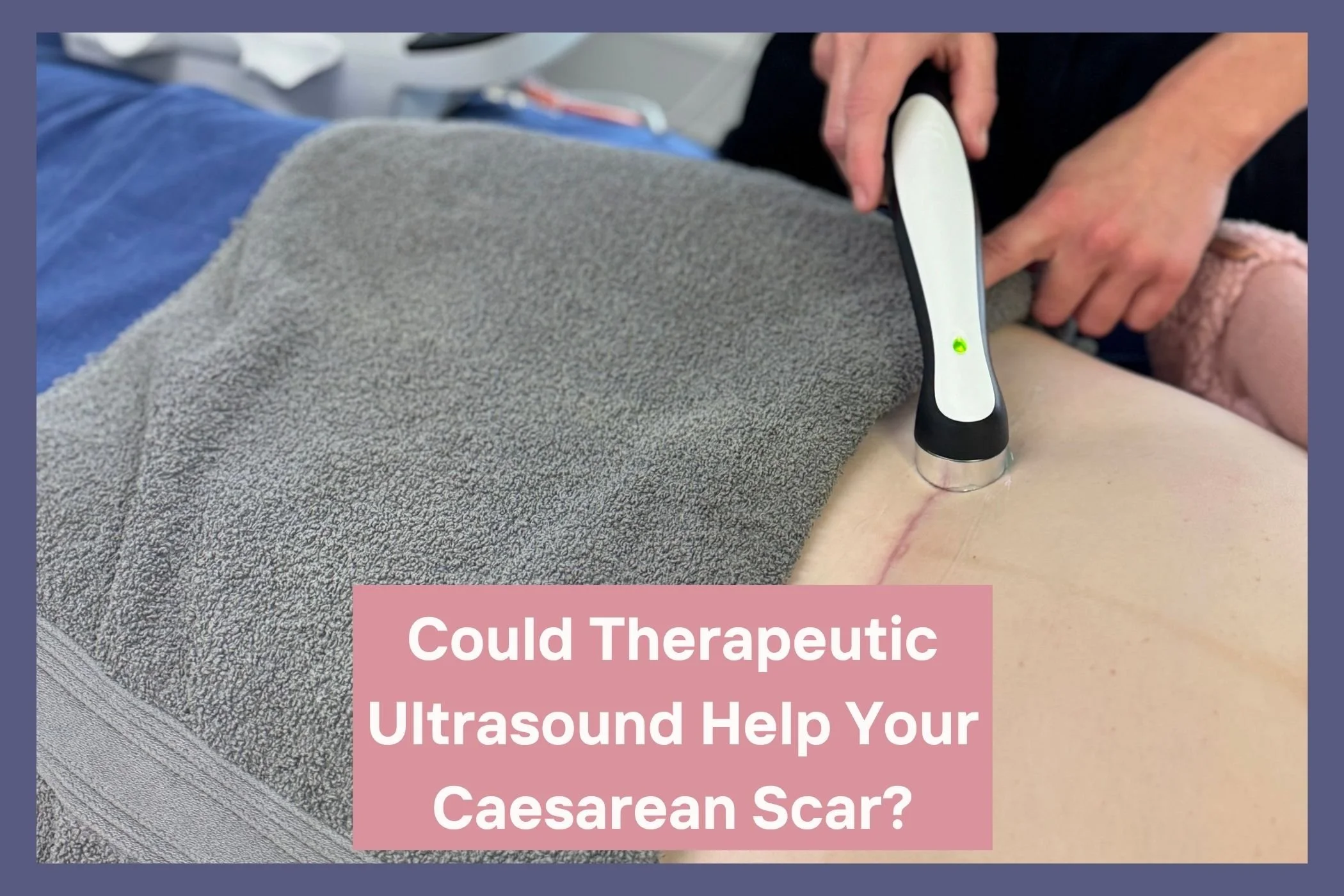
During a therapeutic ultrasound treatment, a small handheld device is moved gently over the scar and surrounding tissues using a conductive gel. The settings used are tailored to your stage of healing, comfort level, and treatment goals.
Most people feel very little during the treatment, although some notice a mild warming sensation. The ultrasound component typically forms part of a broader osteopathic consultation and may last around five minutes.
Therapeutic Ultrasound Is Just One Part Of Caesarean Scar Care
Every recovery journey is different.
For some people, scar-related concerns may involve the local tissues themselves. For others, factors such as movement patterns, abdominal wall function, pelvic floor function, nervous system sensitivity, or previous experiences may also play a role.
This is why therapeutic ultrasound is best used alongside other approaches, which may include:
Osteopathic hands-on treatment
Movement and rehabilitation advice
Education about recovery and return to activity
Our goal is always to understand the bigger picture and provide care that is tailored to the individual rather than focusing on the scar alone.
Looking For More Information?
If you have questions about your caesarean scar or would like support with your recovery, speaking with a healthcare professional experienced in postnatal care can be a helpful place to start.
At Pivot Osteopathy, we regularly work with people at many different stages of recovery after caesarean birth. Whether your birth was recent or many years ago, an assessment can help you better understand the factors that may be contributing to how your scar feels and what options are available to you. It’s never to early or too late to get help if your caesarean scar is bothering you.
References
Leung, et al. (2004)
da Costa Gonçalves et al. (2007)

Disclaimer: This blog is for general informational purposes only and does not constitute the practice of medicine, osteopathy, nursing or other professional health care services, including the giving of medical advice, and no practitioner/patient relationship is formed. The use of information on this blog or materials linked from this blog is at the user's own risk. The content of this blog is not intended to be a substitute for professional medical advice, diagnosis, or treatment. Users should not disregard, or delay in obtaining, medical advice for any medical condition they may have, and should seek the assistance of their health care professionals for any such conditions.