
Is It Pelvic Girdle Pain, SPD, Sciatica or Round Ligament Pain?
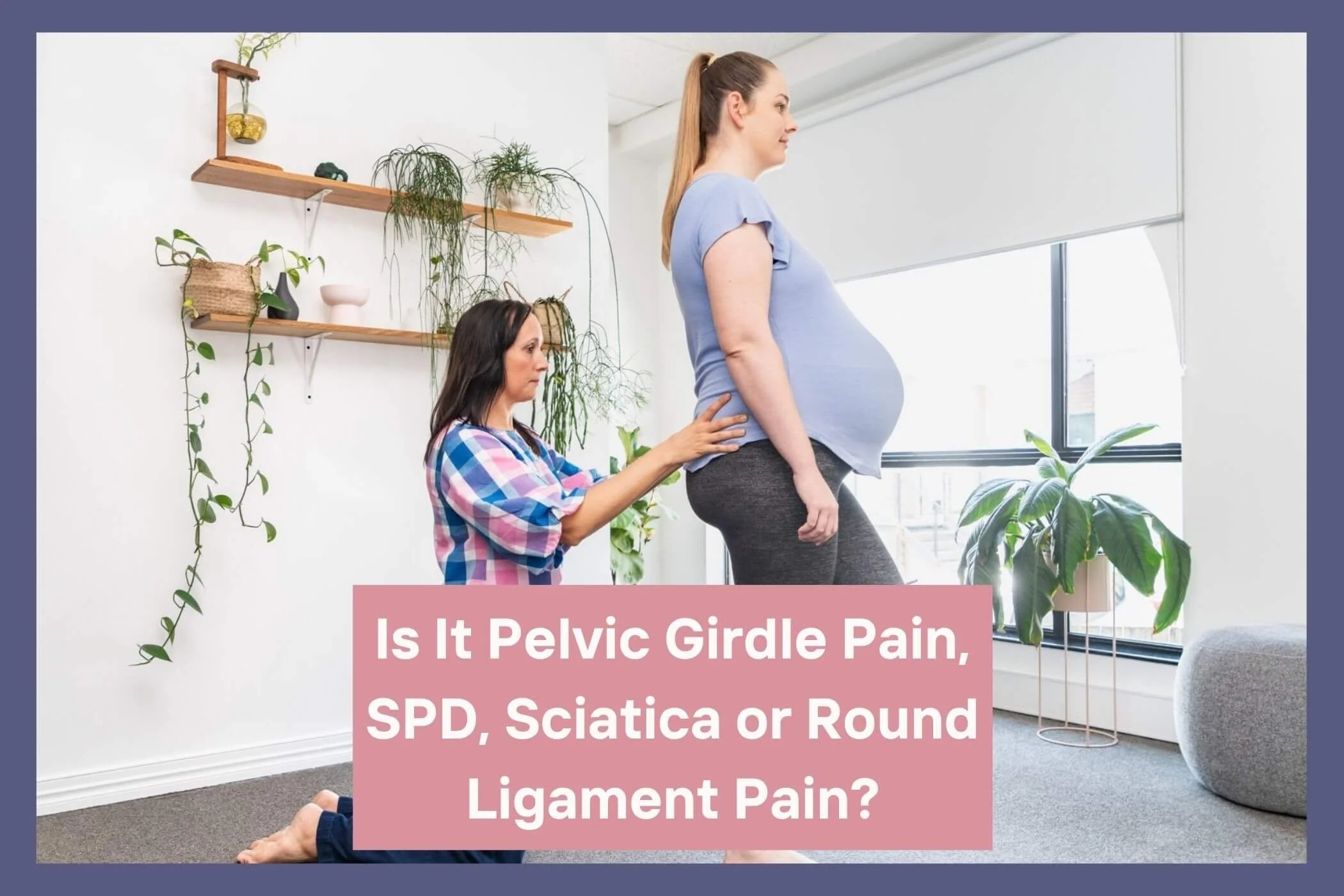
Pregnancy can bring all sorts of aches through your pelvis. It can be hard to know what you’ve got, because there are so many different labels, such as pelvic girdle pain, SPD, sciatica, round ligament pain and lightning crotch. They are all slightly different, but there can be a lot of overlap.
Where you feel the pain, what it feels like and what brings it on can give us useful clues about what may be going on. You do not necessarily need to find the perfect label, but understanding the common patterns can help you make sense of your pain. Below, we look at some of the most common types of pelvic pain in pregnancy and how they tend to differ.
What is pelvic girdle pain?
Pelvic girdle pain, often shortened to PGP, is the term now commonly used to describe pain felt around the pelvic girdle during pregnancy.
Pelvic girdle pain can be felt in several different areas around the pelvis, including the front, back and sides.
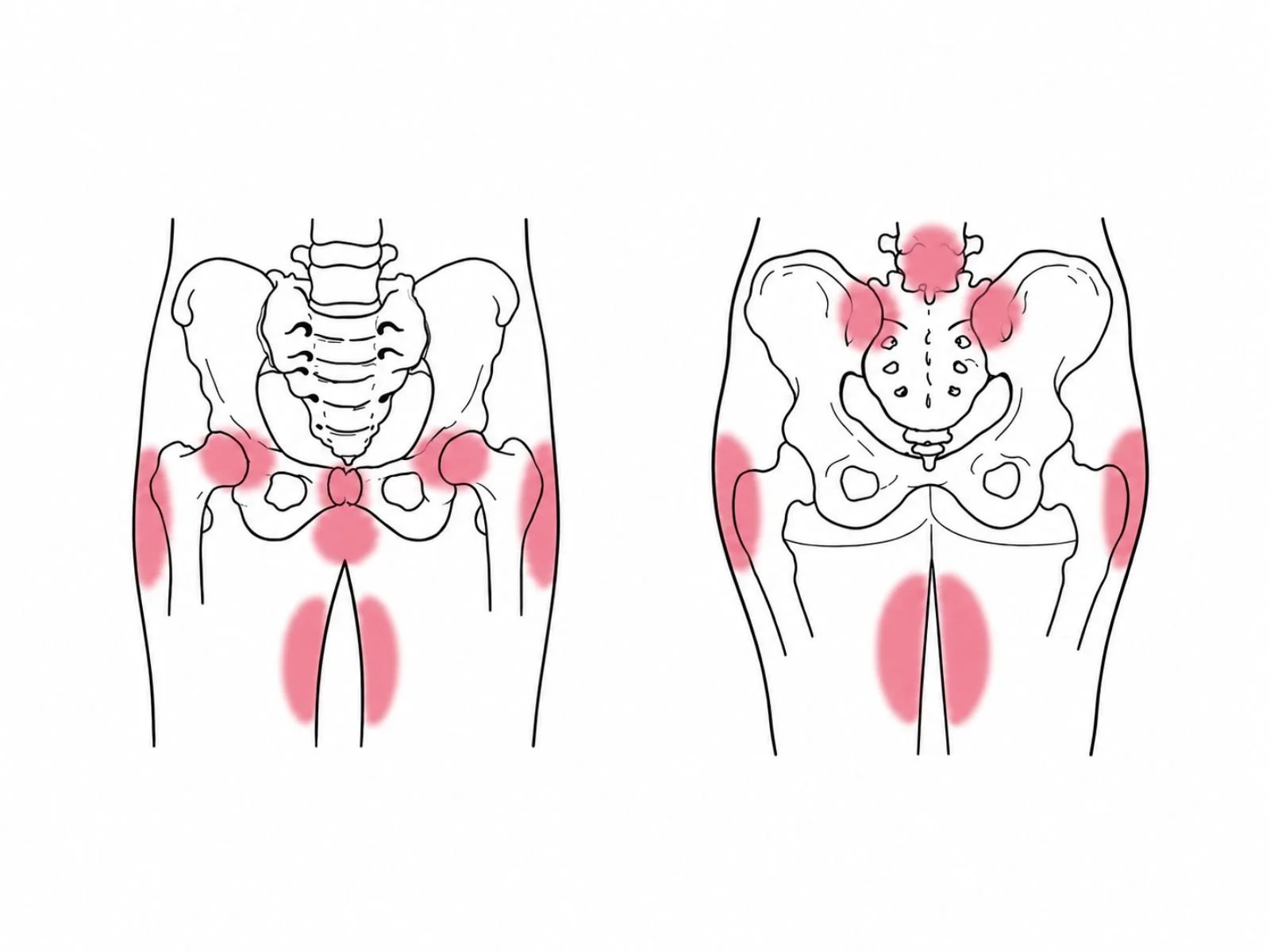
In the past, this was often called SPD, or symphysis pubis dysfunction. You will still hear that term used, but pelvic girdle pain is now the broader term used for pain around the front and back of the pelvis. Either way, the important point is that pelvic girdle pain does not always come from one single structure.
Pregnancy changes the way your body carries weight, moves and shares load. Your pelvis is working as part of a much bigger system that includes your hips, spine, abdominal wall, pelvic floor, ribs and lower limbs.
If you would like a fuller explanation of why pelvic girdle pain can involve more than one area of the body, you can read our article Pelvic Girdle Pain in Pregnancy: Why a Whole Body Approach Matters.
What is SPD or pubic symphysis pain?
SPD is still a commonly used name for pain around the pubic symphysis, the joint at the very front of the pelvis, although pelvic girdle pain is more commonly used nowadays.
You may feel pain directly over the pubic bone, into the groin or across the front of the pelvis. It can be especially noticeable with movements that load one side of the pelvis differently from the other, such as standing on one leg to get dressed, climbing stairs or getting in and out of the car.
Could it be round ligament pain?
Round ligament pain can be confused with pubic symphysis pain because it can also be felt low at the front of the pelvis or into the groin. The round ligaments help support the uterus. As the uterus grows during pregnancy, these ligaments lengthen and respond to increasing load.
In our clinical experience, round ligament pain is often more noticeable on one side and may feel as though it stretches further around or higher into the lower abdomen and pelvis. It may also be triggered by movements that suddenly lengthen or load the area, or by standing for longer periods.
The location can overlap with pubic symphysis pain, which is why it is not always obvious from symptoms alone which structure is contributing most.
What does sciatica feel like in pregnancy?
Sciatic pain usually follows the pathway of the sciatic nerve. It is more commonly felt through the buttock and down the back of the leg. People often describe sciatic type pain as sharp, shooting, burning or electric.
However, not every ache that travels down the back of the thigh is sciatica. If you are experiencing a dull or aching pain through the buttock or back of the thigh, the pain may be referred from structures around the lower back or sacroiliac joint rather than coming directly from irritation of the sciatic nerve.
This is one reason an assessment can be useful if you think you might have sciatic pain. The location of pain gives us clues, but it does not always tell the whole story.
What does lightning crotch feel like in pregnancy?
Lightning crotch is the informal name for a sudden, sharp or electric pain felt low at the front of the pelvis, often around the vagina, cervix or pubic region. It can come on very quickly and may only last for a few seconds at a time.
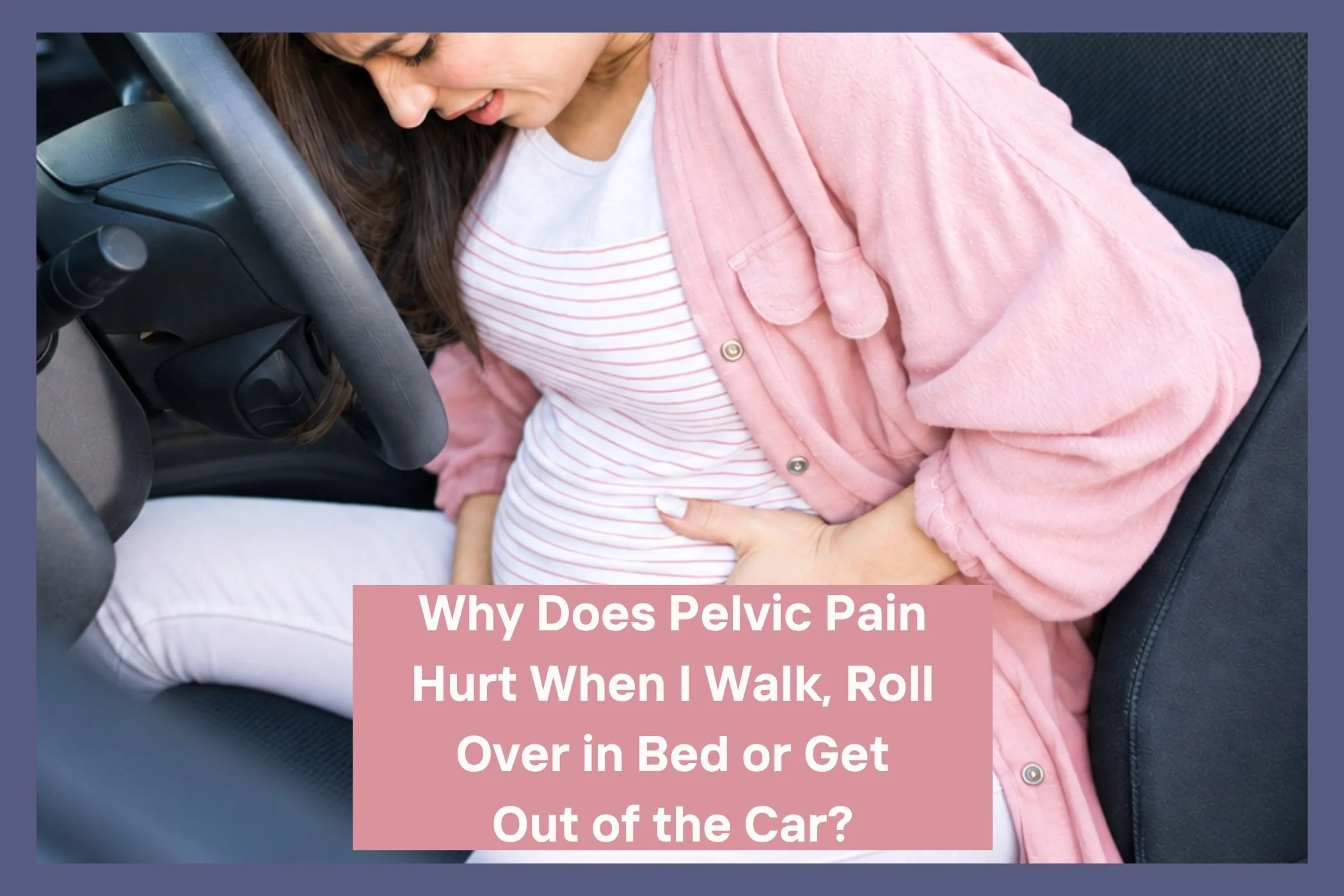
Lightning crotch is usually brief and sudden, and may happen when your baby moves or puts pressure through the lower pelvis. Pelvic girdle pain, by contrast, is more often linked with movements and positions such as rolling over in bed, climbing stairs or getting in and out of the car.
Because both can be felt in the same general region, it can sometimes be difficult to know exactly what is contributing. As with other types of pelvic pain in pregnancy, the location and pattern of your symptoms can help us understand what may be involved.
Can different types of pelvic pain overlap?
The location and quality of your pain can give useful clues, but symptoms do not always fit neatly into one box. Pain at the front of the pelvis may involve the pubic symphysis, round ligaments, pelvic floor or other nearby structures, while pain through the buttock or leg may involve the sacroiliac region, lower back or sciatic nerve.
It is also common for more than one structure to be involved at the same time. This is why we, as osteopaths, do not usually look at one painful area in isolation. An assessment can help us work out which areas seem most relevant and how the rest of your body is adapting around them.
Not all pelvic pain in pregnancy is musculoskeletal, so new, severe or unusual pain is worth discussing with your GP, midwife or obstetric care provider.
Does pelvic girdle pain mean I cannot have a vaginal birth?
This is one of the most common concerns we hear.
Having pelvic girdle pain during pregnancy does not automatically mean you will be unable to have a vaginal or physiological birth. For many people, pelvic pain during pregnancy does not determine how they will give birth.
It can still be useful to think about comfort, movement and positions as you prepare for labour, particularly if some hip or pelvic positions are difficult for you. We will explore this in more detail in the pelvic girdle pain and birth article later in this series.
How do we approach pelvic pain in pregnancy?
At Pivot Osteopathy, we look beyond the area that hurts. Depending on your symptoms, we may assess your pelvis alongside your hips, lower back, abdominal wall, ribs, knees and feet, as well as any previous injuries that may be influencing how your body is adapting through pregnancy.
Understanding where you feel the pain, what brings it on and how the rest of your body is moving can help us work out which areas may be contributing and what might be useful to address as part of your care.
Disclaimer: This blog is for general informational purposes only and does not constitute the practice of medicine, osteopathy, nursing or other professional health care services, including the giving of medical advice, and no practitioner/patient relationship is formed. The use of information on this blog or materials linked from this blog is at the user's own risk. The content of this blog is not intended to be a substitute for professional medical advice, diagnosis, or treatment. Users should not disregard, or delay in obtaining, medical advice for any medical condition they may have, and should seek the assistance of their health care professionals for any such conditions.