
Why Does Pelvic Pain Hurt When I Walk, Roll Over in Bed or Get Out of the Car?
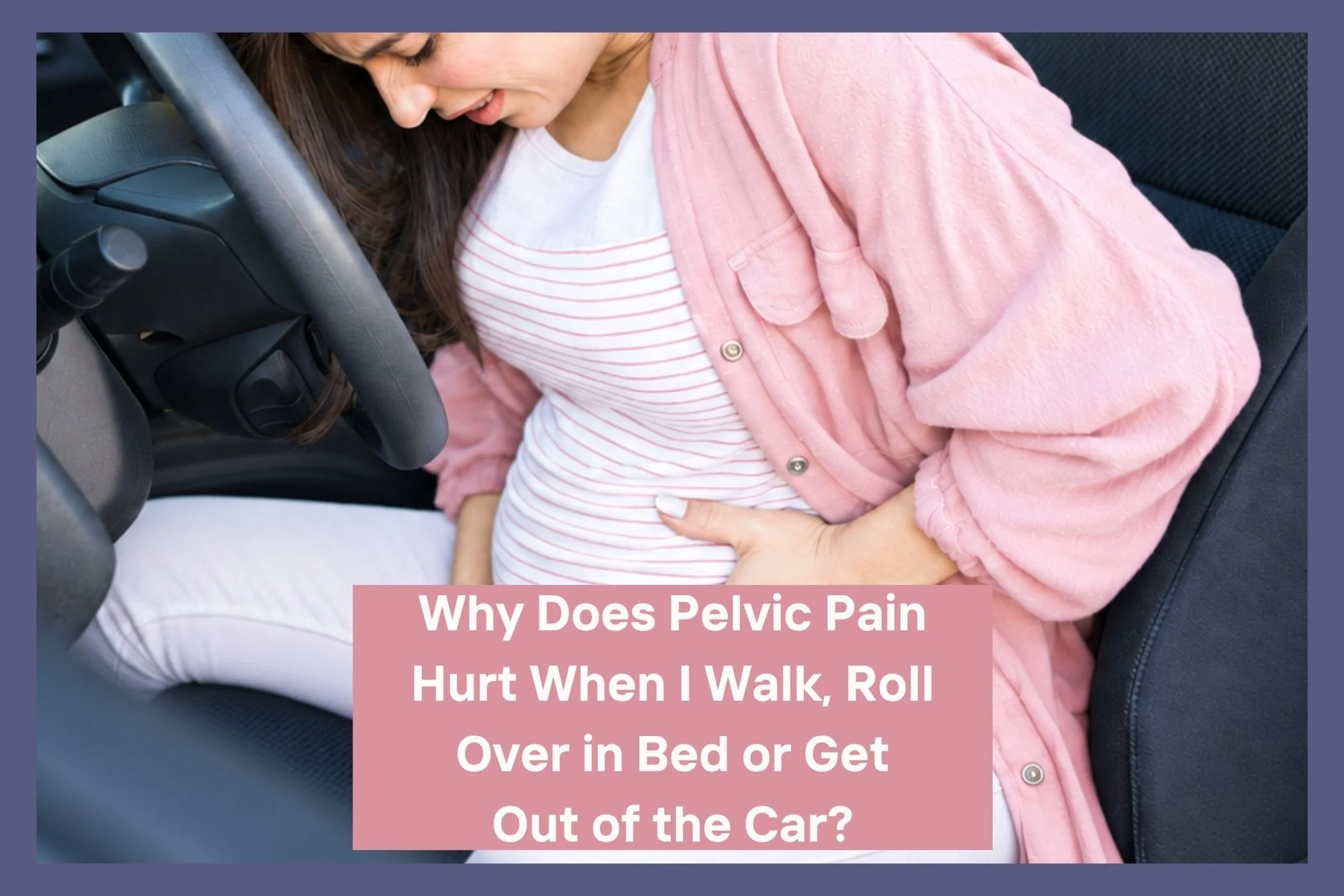
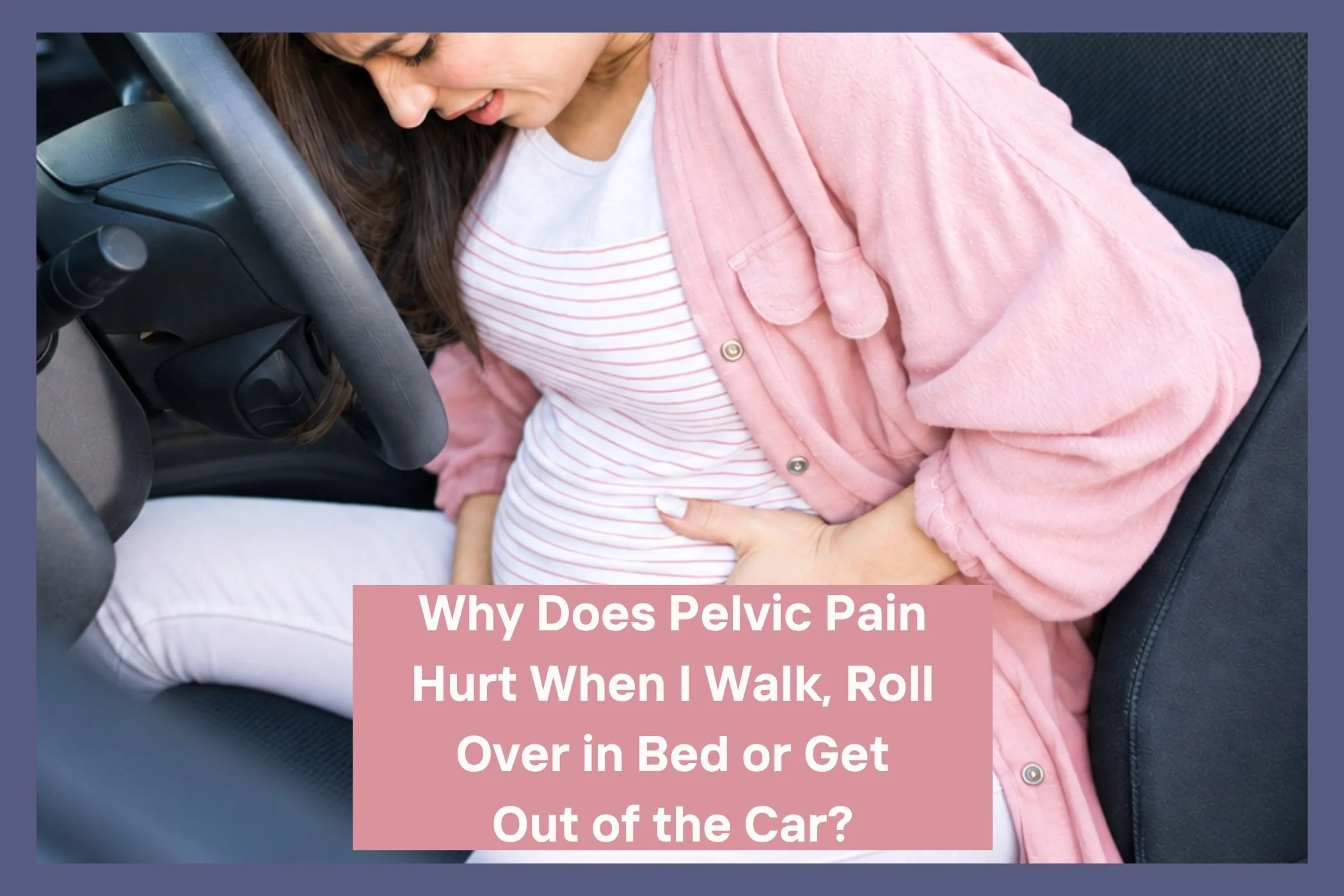
Does it feel like everything hurts now that you’re pregnant? Walking is uncomfortable, rolling over in bed has turned into a carefully planned manoeuvre, or maybe you feel a sharp pain around your pubic bone, groin or buttock whenever you get in or out of the car.
Walking, rolling over and getting out of the car may look like very different activities, but they have several things in common. They all require your body to transfer weight, change direction and coordinate movement between your legs, pelvis and trunk.
During pregnancy, the demands on your pelvis change. Your abdomen grows, your centre of gravity shifts and your body has to continually adapt how it balances, walks and moves. For some people, these changes make certain movements painful and contribute to pregnancy-related pelvic girdle pain.
What is pregnancy-related pelvic girdle pain?
Pelvic girdle pain, often shortened to PGP, is an umbrella term used to describe pain felt around the front, back or sides of the pelvis during or after pregnancy. Other names are sometimes used, such as pelvic instability or symphysis pubis dysfunction (SPD).
People commonly experience pain or discomfort in the following areas:
Pubic bone
Groin or inner thighs
Buttocks
Sacroiliac joints at the back of the pelvis
Hips
Lower back
Perineum
Some people also describe clicking, grinding or a feeling that one leg may give way.
It’s important to know that despite how it may feel, your pelvis isn’t falling apart.
Pelvic girdle pain also doesn’t necessarily mean that one particular joint, ligament or muscle is responsible for your pain. It tells us that the way your body is currently managing movement and load around the pelvis has become painful or sensitive.
Different people can develop PGP for different reasons, which is why the things that help one person may not necessarily help another.
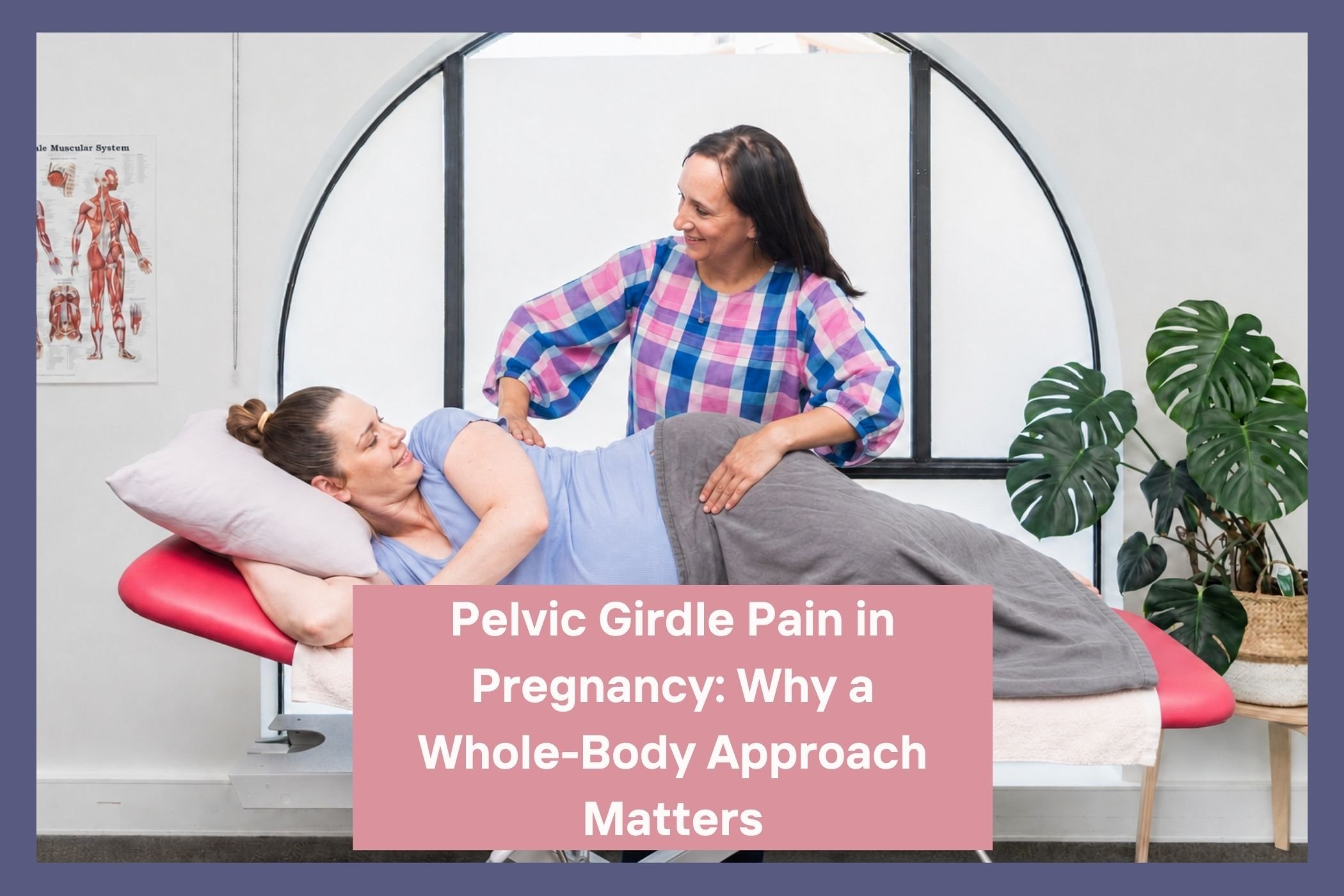
You can learn more in our article Pelvic Girdle Pain in Pregnancy: Why a Whole-Body Approach Matters.
Why do walking, rolling over in bed and getting out of the car hurt?
These activities all ask your body to manage several things at once, including:
Transferring weight from one leg to the other
Temporarily placing more weight through one side
Coordinating the feet, knees, hips, pelvis and back
Rotating or changing direction
Moving the legs into different positions
Adjusting your balance as your centre of gravity changes
Walking, for example, requires you to repeatedly transfer your weight from one leg to the other.
Rolling over in bed asks your pelvis, hips and trunk to rotate and coordinate while you move your legs.
Getting out of the car often involves rotation, moving the legs apart and then transferring your weight through your feet so that you can stand.
During pregnancy, your body is continually adapting. Your abdomen grows, your weight distribution changes and your muscles may need to work differently to help you maintain your balance.
A movement that previously required very little thought may suddenly place more demand on parts of your body that are already working harder.
This doesn’t mean that the movement is damaging your pelvis. It means that, at the moment, your body is having more difficulty managing that particular combination of movement and load comfortably.
Why does pelvic girdle pain affect people differently?
There is rarely one simple cause of pelvic girdle pain.
Your body has spent years developing its own way of walking, balancing, moving and transferring weight. Before pregnancy, it may have been able to accommodate small differences between one side of your body and the other without any problems.
Pregnancy adds a new set of demands to that system.
Factors that may influence how your body adapts can include:
Previous foot, ankle, knee, hip or back injuries
How your hips and trunk are moving
Muscles around the hips, buttocks or inner thighs working harder than usual
Changes in your walking or activity levels
Fatigue and sleep
Previous pain experiences
Work, caring for other children and the other physical demands of everyday life
Sometimes the place that hurts is not the only place worth assessing.
For example, an old foot, knee or hip injury may have changed how you transfer weight from one side to the other. Before pregnancy, your body may have adapted to this extremely well and you may not have experienced any ongoing pain.
Pregnancy can make these differences more noticeable because your body is also adapting to rapidly changing weight, balance and movement demands.
This does not mean that an old injury has damaged your pelvis or is the sole cause of your pelvic girdle pain. It may simply be one part of the overall picture.
The same applies to muscles around the hips, buttocks and inner thighs. If some areas are working harder than usual, they may become tight, tired or sensitive.
For some people, changing how these areas move or gently stretching them can make movement feel more comfortable.
Good care should consider the person experiencing the pain, rather than only the painful part of the body.
What can you do if walking hurts?
Small changes can sometimes make walking more comfortable.
You could experiment with:
Taking slightly shorter steps
Slowing your walking pace
Comparing one longer walk with several shorter walks
Trying different shoes
Noticing whether uneven ground makes your symptoms worse
Gently stretching your gluteal muscles before or after walking
Using a massage ball against a wall around the buttock or lower-back muscles
These are experiments rather than strict instructions. What helps will depend on your particular symptoms.
What can you do if turning over in bed hurts?
You could try:
Using your arms to help with the turn
Moving your legs one at a time
Holding your knees together when you turn
Not holding your knees together and seeing whether that feels better
Sleeping with a pillow between your knees
There isn’t one correct way to roll over in bed.
Sometimes a small change in how you use your legs, arms or trunk is enough to make the movement more comfortable.
What can you do if getting out of the car hurts?
Some options you could explore include:
Moving the seat backwards before getting out
Using your arms for support
Turning your body before you get out so that you can use both legs to stand
Experimenting with whether keeping your legs closer together makes the movement easier
Again, the aim is not to find a perfect technique. It is to find a way of moving that feels more manageable for your body.
Do I always need to keep my knees together?
Advice to keep your knees together can be helpful for some people during activities such as rolling over, standing on one leg or getting out of a car.
However, it does not need to become an absolute rule.
Your hips and legs are designed to move in different directions. Becoming frightened of separating your legs, or holding them tightly together throughout the day, may create more guarding and make movement feel less natural.
A more useful question may be:
What amount and type of movement feels manageable for my body today?
Sometimes this may mean keeping your legs closer together. At other times, a supported movement or gentle stretch into a wider position may feel better.
There is no single movement strategy that works for every person with PGP.
Should I avoid movements that cause pelvic pain?
Not necessarily.
There is a difference between repeatedly forcing your way through a significant pain flare and adjusting an activity so that you can continue moving within a manageable range. It depends on how you're recovering and whether the pain is increasing.
You do not need to push through significant pain, but you also do not need to assume that every uncomfortable movement is damaging your body.
The goal is not to avoid everything or force everything. It is to find a level and way of moving that your body can currently manage.
For one person, this might mean reducing the length of a walk for a while. For another, it may mean changing how they get out of the car. Someone else may find that improving movement through the hip, foot or back makes the painful activity easier.
Research suggests that exercise during pregnancy may reduce the severity of pregnancy-related back and pelvic pain, although it does not necessarily prevent the pain from developing. There is also no single exercise program that is best for every person with PGP because the factors contributing to PGP can be different for everyone.
When could an osteopathic assessment be useful?
Consider seeking individual advice if:
Walking or sleeping is becoming increasingly difficult
Your pain is significantly affecting work or everyday activities
Generic advice has not helped
You are becoming worried or frightened about normal movement
Your pain is strongly one-sided
A previous back, hip, knee, ankle or foot problem has become noticeable again
You are unsure which activities to modify and which to maintain
Your symptoms are becoming progressively worse
An assessment can also help distinguish pelvic girdle pain from other causes of pregnancy-related back, hip, groin or pelvic pain.
How can an osteopath help with pregnancy-related pelvic girdle pain?
When we assess pelvic girdle pain at Pivot Osteopathy, we do not look only at the place that hurts.
We may also consider how your feet, knees, hips, back and trunk contribute to walking, turning and transferring weight.
We will ask about previous injuries, how your symptoms change throughout the day and which activities have become difficult.
Sleep, work, exercise, caring responsibilities and stress may also be relevant—not because the pain is psychological, but because these factors can influence the demands being placed on your body and nervous system.
Depending on what we find, care may include:
Gentle hands-on osteopathic treatment
Supported stretching
Movement or exercise advice
Pacing and activity-management strategies
Practical ways to modify painful activities
Referral to or collaboration with other members of your maternity healthcare team
The aim is not to put your pelvis “back into place.”
It is to understand the factors that may be contributing to your pain and help you find more comfortable and confident ways to move.
Osteopathic care may form one part of an individualised approach to managing pregnancy-related musculoskeletal pain.
Would you like help understanding what is contributing to your pelvic pain?
Pelvic girdle pain can be influenced by more than one part of the body.
If walking, rolling over or getting out of the car is becoming difficult, an osteopath can assess how your feet, legs, hips, pelvis and back are working together. We can also consider whether previous injuries and your current daily demands may be contributing.
Depending on your needs, care may include hands-on osteopathic treatment, supported stretching, movement advice and practical strategies to help you move with greater comfort and confidence.
Learn more about osteopathy and pregnancy or book an appointment with Pivot Osteopathy in Brisbane.
Disclaimer: This blog is for general informational purposes only and does not constitute the practice of medicine, osteopathy, nursing or other professional health care services, including the giving of medical advice, and no practitioner/patient relationship is formed. The use of information on this blog or materials linked from this blog is at the user's own risk. The content of this blog is not intended to be a substitute for professional medical advice, diagnosis, or treatment. Users should not disregard, or delay in obtaining, medical advice for any medical condition they may have, and should seek the assistance of their health care professionals for any such conditions.