
How to Create a Positive Caesarean Birth Experience
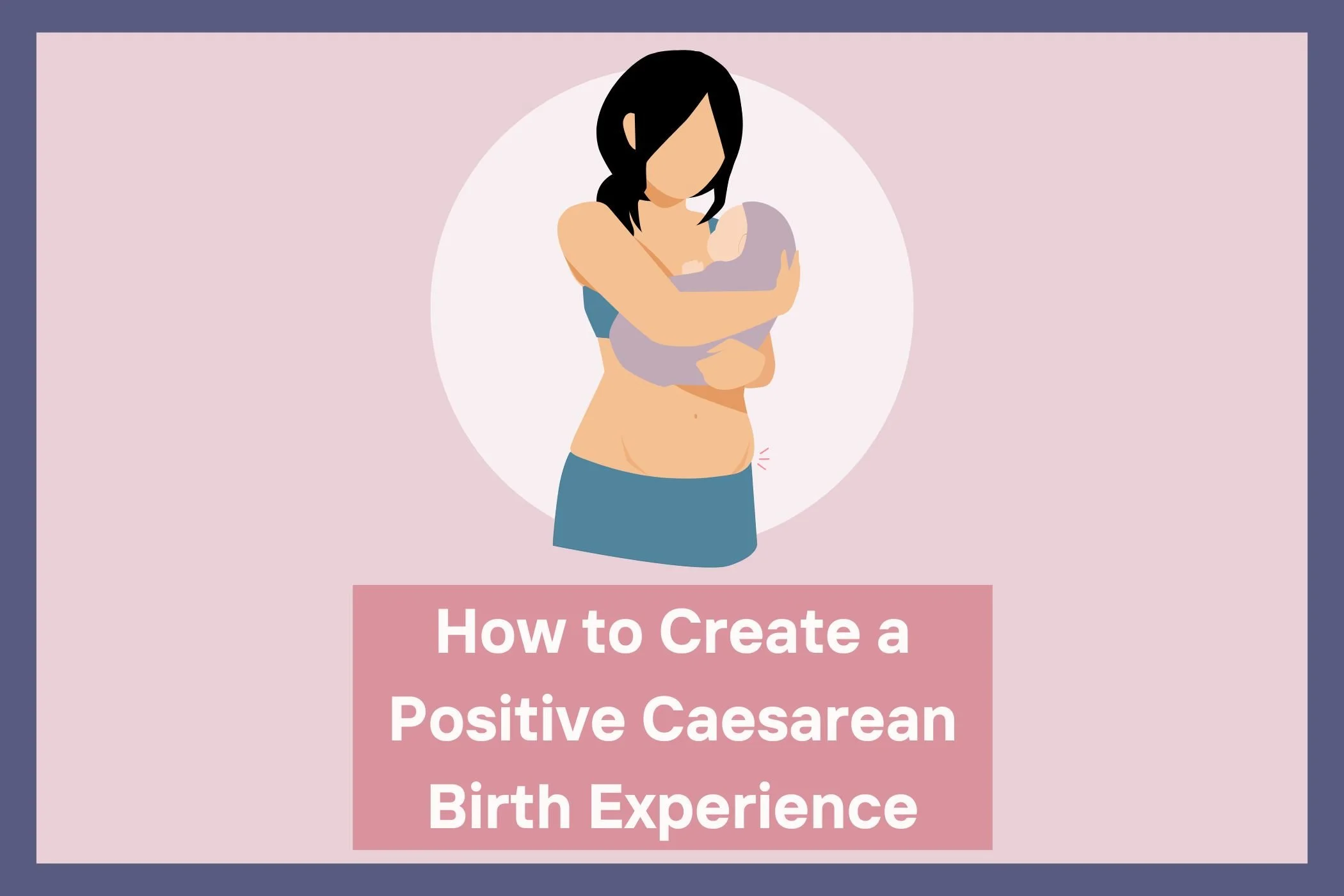
A caesarean birth can sometimes feel like something that “happens to you,” rather than something you actively participate in.
But it doesn’t necessarily have to feel like that. With the right information, conversations, and preparation, a caesarean birth can still feel calm, connected, and deeply meaningful. There are often more choices available than people realise — small details that can help you feel more involved, more prepared, and more supported on the day.
Below are some things you may like to consider, whether you’re having a planned c-section birth or you’re just thinking about your birth preferences.
Delayed cord clamping
You might like to ask about delayed cord clamping, which is waiting until the umbilical cord has finished pulsing before it is clamped.
This allows more blood to transfer from the placenta to your baby, which can help support their iron levels in the early months of life.
Delayed cord clamping may be possible in a caesarean birth, depending on the clinical situation, but it’s worth having a chat with your provider.
Involving your birth partner
Your birth partner can have a special role to play in a c-section birth, whether it’s planned or not.
They may be able to:
Cut the cord
Be present for skin-to-skin contact
Stay with your baby if you are unavailable for a short time
Talking through different scenarios with your birth partner can help you both feel more prepared and connected on the day.
Choosing your baby’s birth date
If your caesarean is planned, you may have some flexibility in choosing your baby’s birth date.
For some families, this can feel like a small but meaningful way to feel more involved in the experience.
Capturing the moment
You might like to consider whether you would like photos taken during your baby’s birth.
Some people choose to have a professional birth photographer, while others prefer a member of the healthcare team or their partner to take a few photos.
Skin-to-skin contact
Skin-to-skin contact can often be an important part of a caesarean birth.
If you are unable to do this straight away, your partner or support person may be able to step in. Some people find it helpful to plan for this in advance, including wearing clothing that allows easy access.
Feeding preferences
You may wish to think about your feeding preferences ahead of time.
This could include:
Whether you plan to breastfeed
Whether you would like support with feeding
Your thoughts on supplementation, if needed
Having these conversations early can help you feel more supported and informed. And remember, the research on oxytocin shows that connection and synchronisation are the most important parts of breastfeeding. So if you’ve had an emergency c-section and everything has felt rushed or frightening, working on building that calm back into your connection between you, your baby, and your birth partner can really help bring in those good hormones.
Your placenta
Some people like to think about whether they would like to see or keep their placenta.
Options may include encapsulation, planting, creating art, or donating. This is a very personal choice and something you can explore if it feels meaningful to you.
Seeing your baby’s birth
Some hospitals offer the option of a clear drape or lowering the screen during the birth.
This can allow you to see your baby being born, if that feels right for you. For some people, this can help create a greater sense of connection and involvement in the moment.
It may be worth having a conversation with your healthcare provider about what options are available in your setting.
Creating a calm environment
Small details can help shape the environment around your birth.
You might like to consider:
Asking for minimal noise so you can hear your baby’s first cry
Delaying routine checks (if safe to do so) to allow time for bonding
If your c-section has been rushed or scary, think about what you can do afterwards to help return to calm. These things can be simple, such as asking for softer lighting, minimal conversation, and a slower pace while you meet your baby. Creating a quieter, more contained space can help you tune into your baby, your breath, and the experience of those first moments together, or bringing your favourite dressing gown to hospital to change into later for baby snuggles.
Having someone you can do a birth debrief with afterwards can also be helpful. Some midwives, doulas, and psychologists offer this, and many of our patients have found it incredibly helpful for healing.
Preparing your body and mind
Preparing for a caesarean birth isn’t just about logistics — it can also be about how you feel in your body.
Simple practices such as breathing, relaxation, meditation, prayer, or using a mantra can help you feel more calm and supported during your birth.
Practising these ahead of time can make them feel more familiar and accessible on the day.
Lastly, remember that every birth is different
Every birth is different, and not all options will be available in every situation.
What matters most is that you feel informed, supported, and involved in your experience in a way that feels right for you.
We know thinking about your birth possibilities isn’t for everyone, and we respect that. But we know it can be helpful for many of our mamas-to-be to have thought through some of their options and discussed them with their birth providers. It is often helpful to know what you might like if it is possible during your birth.
How osteopathy may help you prepare
As you prepare for a caesarean birth, you might also consider how your body is feeling leading into the experience.
As osteopaths, we take a whole-body, whole-person approach, considering how you will need to move during pregnancy and as you heal and nurture your newborn.
Many of our patients seek us out because they want to prepare their body and mind for birth and beyond, while others may just want to be a bit more comfortable during their pregnancy.
If you’re curious about how osteopathy may support you in preparing for a caesarean birth, we’re here to help guide you through that process.

Disclaimer: This blog is for general informational purposes only and does not constitute the practice of medicine, osteopathy, nursing or other professional health care services, including the giving of medical advice, and no practitioner/patient relationship is formed. The use of information on this blog or materials linked from this blog is at the user's own risk. The content of this blog is not intended to be a substitute for professional medical advice, diagnosis, or treatment. Users should not disregard, or delay in obtaining, medical advice for any medical condition they may have, and should seek the assistance of their health care professionals for any such conditions.